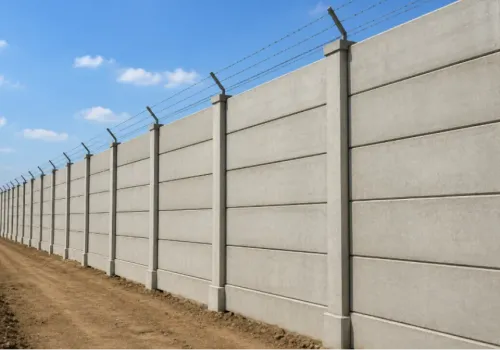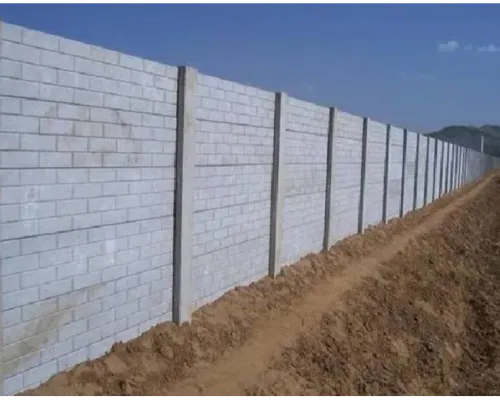


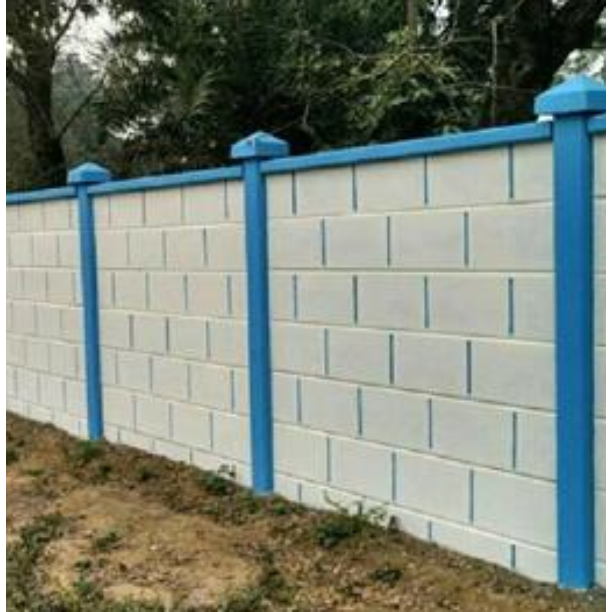
An RCC compound wall may look straightforward once installed, but its suitability depends on several decisions made much earlier. Concrete quality, reinforcement, component dimensions, foundation requirements, manufacturing consistency, transportation, and installation all influence the completed boundary.
For this reason, understanding what an RCC Compound Wall Manufacturer should provide can help builders and property owners evaluate the system more effectively.
Start With the Actual Site Requirement
The first question should not be about price. It should be about application.
A factory perimeter may have different requirements from a residential layout, warehouse, institutional campus, or agricultural property. Wall height, boundary length, terrain, accessibility, security expectations, and surrounding activity can all influence the appropriate configuration.
Before manufacturing begins, establish:
- Total approximate boundary length
- Required wall height
- Site access conditions
- Ground characteristics
- Intended property use
- Installation constraints
- Any project-specific structural requirements
Accurate information at this stage helps reduce assumptions later.
Understand How the Components Are Manufactured
Precast RCC compound walls generally use factory-manufactured components that are transported to the site for assembly.
Ask how dimensional consistency is maintained across panels and columns. Components that are intended to work together should be manufactured to suitable dimensions and tolerances.
Concrete preparation, reinforcement placement, mould condition, curing practices, storage, and handling are all relevant manufacturing considerations.
For contractors, consistency becomes particularly important when hundreds of components are required for a long industrial or development boundary.
Ask About the Complete Wall System
Evaluating only the panel can give an incomplete picture.
A compound wall functions as a system. Depending on its design, this may involve columns, panels, foundations, joints, installation spacing, and other supporting elements.
The manufacturer should therefore understand how the supplied components are expected to be installed rather than discussing the wall purely as individual concrete pieces.
Consider Transportation Before Finalizing the Order
Precast components must travel from the manufacturing facility to the construction site. Delivery therefore deserves attention during planning.
Projects within Nagpur and other locations in Maharashtra should consider whether large vehicles can reach the property, whether unloading space is available, and whether the site can accommodate component handling.
Restricted roads, unfinished access routes, overhead obstructions, or congested project areas may influence delivery planning.
These details are easier to address before dispatch than after materials arrive.
Evaluate Installation Planning
Good manufacturing and poor installation are not a useful combination.
Ask who will handle installation and how the process will be coordinated. Site levels, column positioning, foundation preparation, alignment, panel placement, and handling procedures can affect the finished result.
For larger projects, understanding installation productivity can also help contractors coordinate boundary work with other civil activities.
Compare Value Beyond the Initial Rate
A low quoted rate can be attractive, but comparing suppliers only on a per-unit figure may hide differences in scope.
Determine what the quotation includes. Transportation, installation, foundations, unloading, taxes, site preparation, and other project requirements may be treated differently by different suppliers.
A meaningful comparison should consider the complete requirement and clearly defined scope.
Look for Project-Specific Communication
Urbtec Precast serves projects requiring RCC and precast wall systems in Nagpur. A useful supplier discussion should cover the property type, wall dimensions, site accessibility, quantities, delivery requirements, and installation expectations before specifications are finalized.
This becomes especially important for industrial owners, infrastructure companies, builders, and developers managing larger boundaries.
Selecting an RCC compound wall manufacturer is therefore less about finding a standard product and more about finding a system that fits the site. Clear specifications, manufacturing consistency, realistic logistics, and coordinated installation provide a stronger basis for evaluating the overall solution.