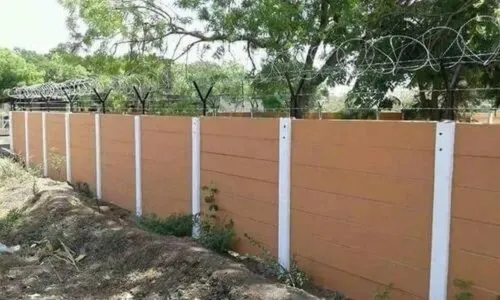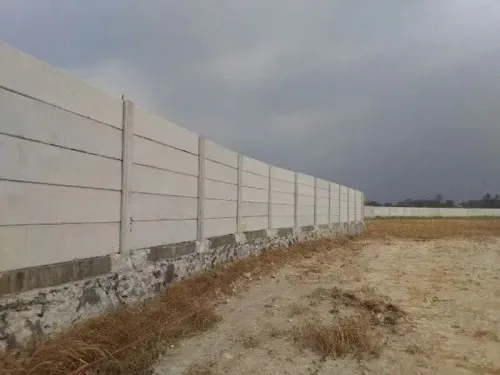
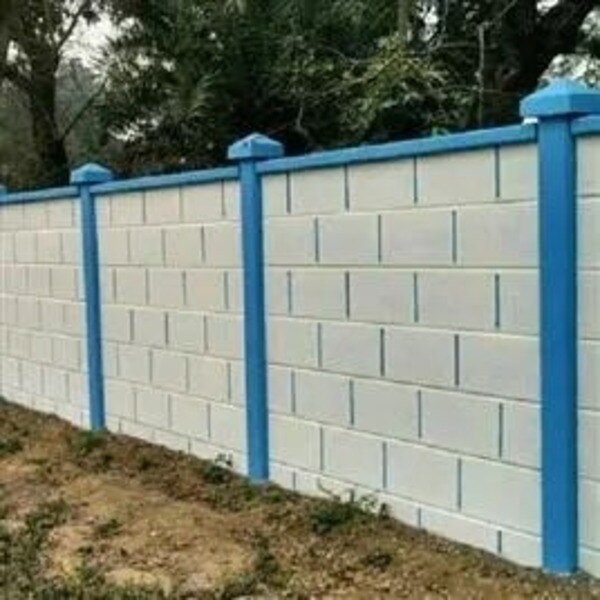
Nagpur’s monsoon can stop excavation, soften crane access and expose fresh concrete to washout, even when wall panels are already available. You will be able to separate factory work from site work, decide when erection is safe, and build a weather-linked programme that limits delay instead of treating precast as automatically rain-proof.
Key takeaways
- Order factory-cured panels before monsoon excavation begins.
- Schedule foundation work around rainfall, access and saturated soil.
- Check panel dimensions, curing records, reinforcement and concrete damage.
- Use masonry where irregular boundaries or frequent design changes dominate.
Why factory-made panels reduce monsoon schedule exposure
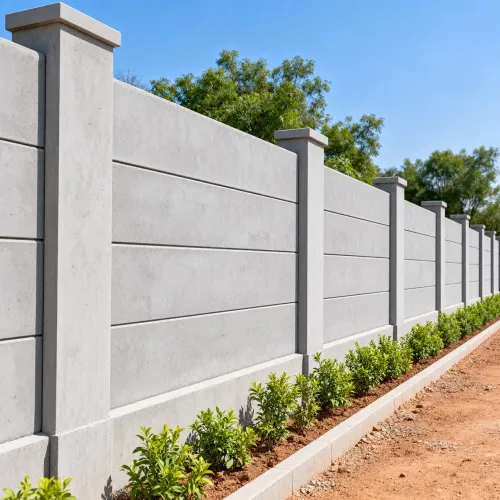
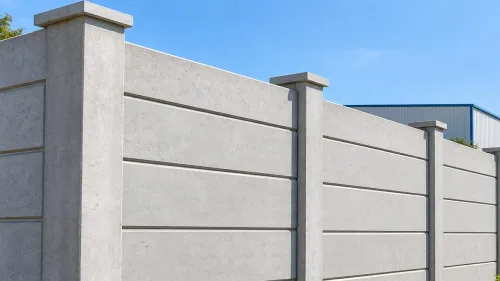
The June-to-September southwest monsoon creates the biggest schedule advantage for an rcc ready made compound wall for weather in Nagpur when panels are manufactured and cured under factory control, away from rain. While the factory works, your team can survey the boundary, confirm the legal line, prepare access and excavate foundations in parallel.
| Option | Where weather affects the schedule | Site consequence |
|---|---|---|
| Factory-made RCC panels | Rain does not stop panel production or controlled curing | Delivery and erection wait mainly on foundation, access and lifting readiness |
| Conventional masonry | Brick or block laying, mortar mixing, plastering and curing remain outdoors | Repeated wet and dry cycles interrupt several trades and extend protection work |
Sequence the work so panels are ready before the site needs them:
- Complete surveying, foundation preparation and access planning while production and curing continue.
- Deliver panels only after truck routes, foundations and crane bearing areas are ready.
- Erect, align and joint-seal panels during the shortest practical site window.
Precast removes the large-area, in-situ concrete placement risk: rain cannot wash cement paste from a freshly placed panel surface or raise its effective water-cement ratio. It does not remove delays from excavation, foundations, saturated ground, transport, unloading or lifting.
The benefit is greatest when you order early enough for production and curing to overlap civil work. Waiting for the first dry day to begin surveying, manufacturing, foundations and installation leaves every activity on the monsoon critical path. Shorter on-site assembly then matters because fewer wet-weather operations remain exposed.
What Nagpur rain, heat and saturated ground do to installation
Rain does not automatically stop a ready-made compound wall installation, but it stops particular operations. A ready made compound wall weather in Nagpur assessment must separate factory-cured panels from site work: rain can leave panels unaffected while saturated ground blocks excavation, transport or lifting.
Stop these activities when conditions create a defect or safety failure:
- Excavation, if post holes collapse or founding soil is unstable; otherwise hidden foundation defects can cause settlement and poor alignment.
- Concrete placement, if rain can wash cement paste from the surface or increase the effective water-cement ratio. Standing water around foundations also causes laitance and joint washout.
- Truck movement on waterlogged roads or muddy routes, because vehicles lose traction and damage access.
- Crane lifting during thunderstorms, unsafe gusts or when outriggers lack firm bearing. Long panels can swing, stain or strike the wall.
- Work in intense summer heat without shade and curing controls; rapid drying cracks concrete, while high humidity slows drying of joints and sealants.
After drainage, dewatering and firm access return, resume surveying, material inspection, unloading and erection under the lifting plan, including its lifting points, exclusion zones and wind limits. Protect panel faces from muddy splash and keep joints covered.
For an RCC wall during rainy weather, inspect post plumb, panel seating and erosion around posts before backfilling, and record defects before soil conceals them.
How to verify panels, foundations and rain-sensitive workmanship
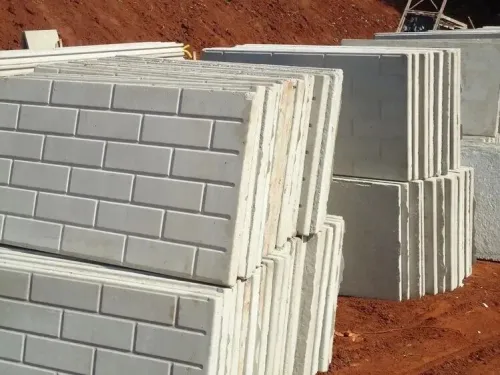
1. Before unloading, ask for the panel age, factory curing records, concrete strength information, reinforcement details and identified lifting points. Factory curing does not replace site curing. Inspect each panel for cracks, edge damage and damaged lifting inserts, then confirm its orientation against the approved layout.
2. Treat posts, footings and post pockets as site-controlled work. Check footing depth, founding soil, standing water and protection from direct rain; a weak or flooded base can settle beneath an undamaged panel. Keep fresh concrete, joint grout, sealant and repair mortar covered and protected from premature drying.
3. During erection, record post plumb, panel seating depth and joint width before fixing the next panel. Check sealant or grout continuity, drainage outlets, backfill compaction and the wall-footing junction. Add these observations to the handover record: surface inspection alone can miss joint washout, erosion around posts and hidden foundation defects.
4. For an rcc wall during rainy weather, do not accept the wall as waterproofing. Panels can admit water through post grooves, horizontal joints, cracks, open coping interfaces and the wall-footing junction.
On sloping or waterlogged plots, verify that runoff is diverted and drainage behind the wall remains open; uncontrolled water can erode soil, expose footings and push panels out of plumb. Finally, photograph cracks, edge damage, plumb, seating, joint width, drainage, backfill and sealant or grout continuity before handover.
A weather-linked installation sequence and buying decision
Treat ready made compound wall weather in nagpur as a two-track programme: factory work can continue while site work waits for safe conditions. The buyer must fix the legal boundary, drainage and foundation design before committing to delivery.
- Complete the boundary survey and confirm the legal line with site records and adjoining owners.
- Mark drainage paths, strengthen truck and crane access, then excavate foundations or prepare post pockets.
- Finish footing or post foundation work before the heaviest recurring rain, and allow sufficient strength gain before loading the supports.
- Order panels as soon as the boundary design is fixed, so factory production and curing run in parallel with civil preparation.
- Set a civil-readiness milestone covering foundation acceptance, drainage, firm access and cleared lifting zones.
- Set separate milestones for panel delivery, unloading, erection, joint sealing, backfilling and final plumb checks. Add float for post-rain access recovery.
- Record each gate in writing: factory production, civil preparation and erection. Do not release the next gate on a verbal promise.
Order early when factory lead time can overlap the monsoon. Wait for a dry access window before delivery or crane work if roads, soil or crane outriggers cannot carry loads. Precast wall weather delays then affect site logistics rather than factory curing alone.
Urbtec Precast can coordinate local access checks, delivery timing and site acceptance; the buyer remains responsible for confirming drainage, foundations and readiness.
Related products
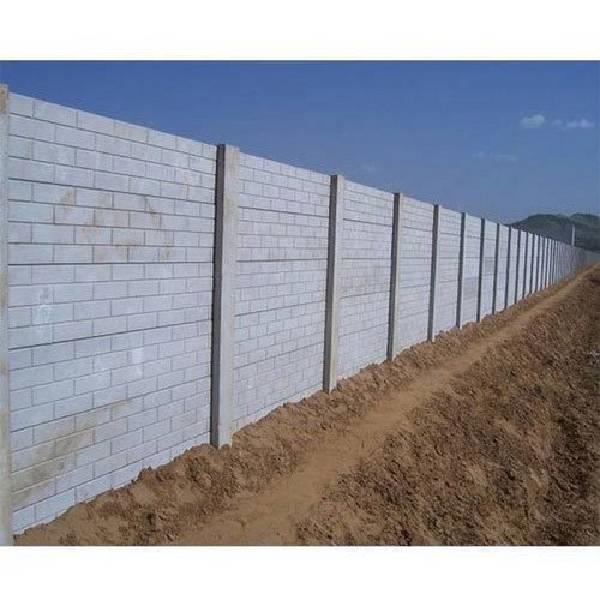 | Compound Wall RCC Ready Made Precast Compound Wall Material Rcc Wall Type As per requirement Thickness As per requirement Type As per requirement Size As per requirement Built Type As per requirement... View product → |
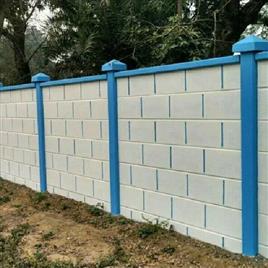 | Compound Wall Material RCC, Concrete Thickness 10-20 mm Built Type Modular, Panel Build Height 9 Feet Wall Thickness 5-20 mm Urbtec Precast We, Urbtec Precast, are... View product → |
Where precast saves effort—and where conventional masonry still competes
The useful comparison is exposure to stoppages, not a promised price or completion date. Conventional masonry keeps the site dependent on repeated deliveries and storage of bricks or blocks, sand and cement; mortar mixing, laying, lintel or support work, plastering, curing, debris removal and rain protection continue across several workable dry periods.
| Option | Site work still exposed | Main delay exposure |
|---|---|---|
| Conventional masonry | Deliveries, mixing, laying, plastering and curing | Repeated dry windows across several trades |
| Precast wall | Foundations, unloading, lifting, alignment, joints and backfill | Truck access, crane bearing, foundation readiness and panel sequencing |
A precast wall shifts much of the production and curing work into a factory, so the site has fewer rain-sensitive operations. That helps with precast wall weather delays, but it is not weather-independent: saturated access roads, inadequate lifting equipment, weak foundations, transport damage or incorrect panel sequencing can stop erection.
Before handover, create an acceptance record covering:
- Panel cracks and edge damage
- Post plumb and panel seating
- Joint width and sealant continuity
- Drainage outlets and foundation backfill condition
This record documents weather-related defects before they become disputed repairs.
Frequently asked questions
Why do factory-made RCC panels reduce monsoon schedule exposure in Nagpur?
Panels are manufactured and cured under factory control while your team surveys the boundary, confirms the legal line, prepares access and excavates foundations. Rain affects fewer critical activities at the site.
How do Nagpur rain, heat and saturated ground affect compound wall installation?
Rain can flood excavations, soften founding soil and delay concrete work. Heat increases moisture loss from fresh concrete, while saturated ground can cause sidewall collapse, settlement or difficult access for lifting equipment.
What should you verify before accepting an RCC ready-made compound wall?
Check panel dimensions, visible cracks, edge damage, reinforcement details, concrete curing records, batch identification and the foundation layout. Confirm that excavations are stable and that water is removed before foundation concrete is placed.
What is a weather-linked installation sequence for a precast compound wall?
Survey and mark the boundary first, arrange access and drainage, excavate in manageable sections, place foundations during a dry window, and install inspected panels after the bases have gained adequate strength. Protect open excavations from runoff.
When does conventional masonry compete with a precast compound wall?
Masonry remains competitive for irregular boundaries, frequent changes in wall height, tight access and designs requiring many on-site details. Precast saves more effort when the boundary is repetitive, access is suitable and schedule certainty matters.
Related products
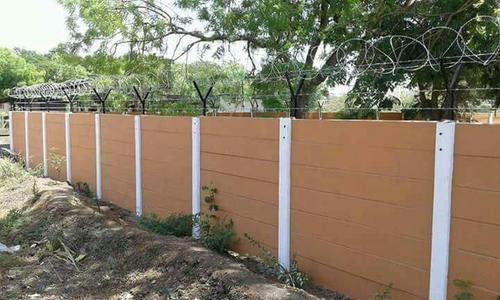 | Compound Wall Precast Rcc Boundary Compound Wall Material RCC Thickness 10-40 mm Built Type Panel Build, Modular Shape Rectangle Height 7 Feet Wall Thickness 5-20 mm We, URBTEC PRECAST, are leading... View product → |
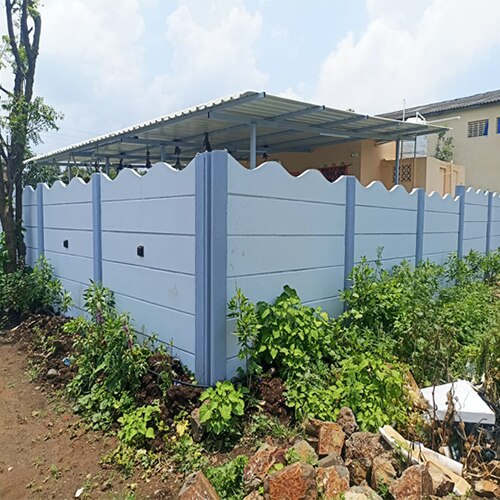 | Compound Wall Material Cement Built Type Modular, Panel Build Usage/Application Garden Surface Finish Rustic Height 4 Feet Wall Thickness 5-20 mm URBTEC PRECAST... View product → |
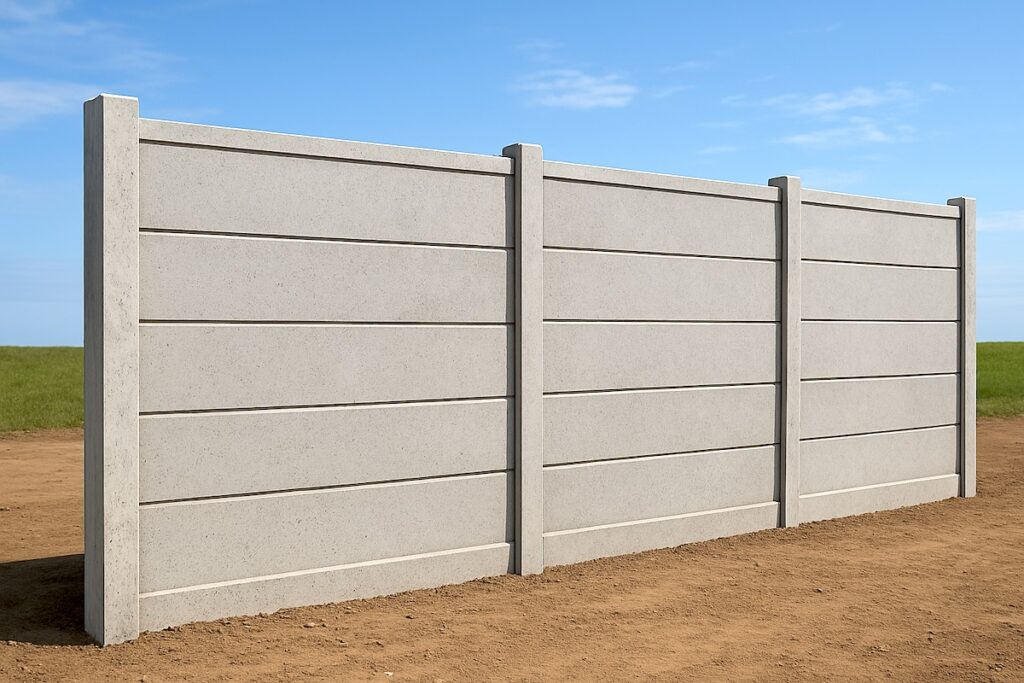 | Compound Wall Precast Concrete Compound Wall Wall Type Compound Wall Thickness 50 mm Material Concrete Built Type Panel Build, Prefab Build Beams Size 6x6 Inches, 150x150 mm, 200 mm x 200 mm... View product → |
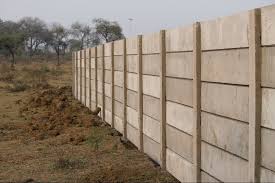 | Compound Wall Material Concrete Built Type Modular, Panel Build Shape Rectangle Surface Finish Rustic Height 6 Feet Wall Thickness 5-20 mm View product → |
Keywords