

Selecting a boundary wall method is not simply a choice between concrete and brick. The decision affects construction time, labour requirements, material movement, site organization, maintenance considerations, and overall project coordination.
When comparing a conventional masonry wall with an RCC Compound Wall Supplier, builders and property owners should evaluate the complete construction process rather than judging only the visible finished wall.
How the Two Methods Differ
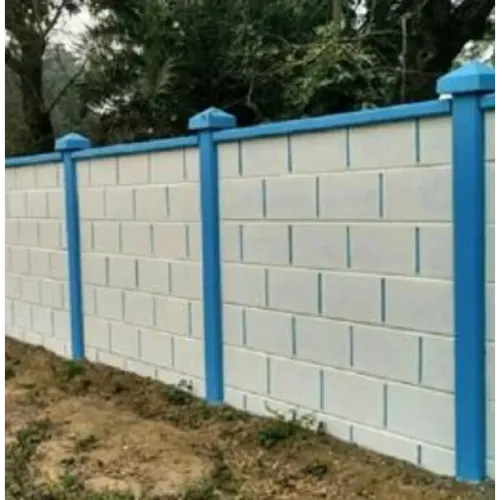
Conventional compound walls are generally constructed largely at the final location. Materials are delivered to the site and multiple activities take place there, including masonry, mortar preparation, curing, plastering, and finishing as required.
Precast RCC systems take a different approach.
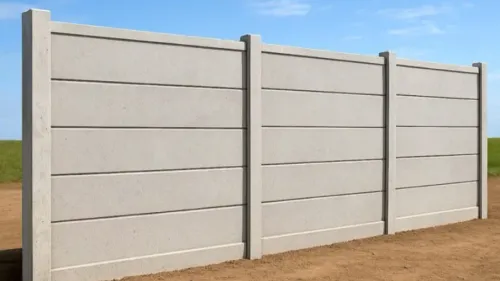
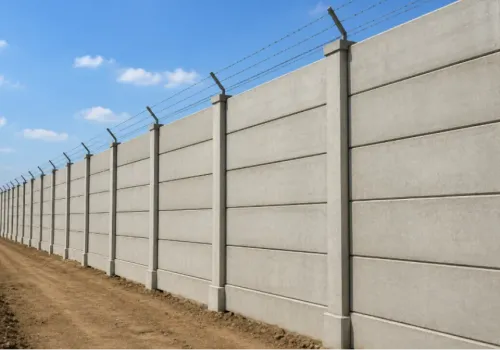
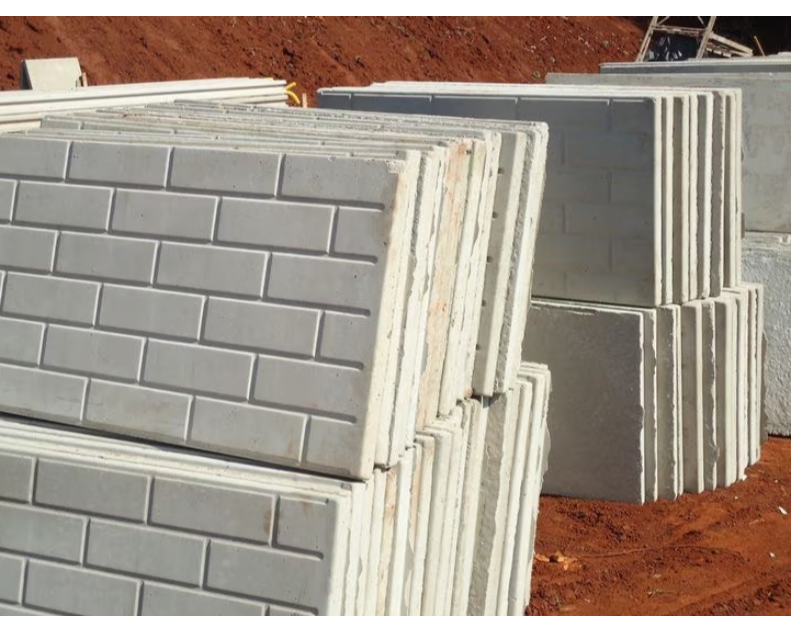
Concrete panels, columns, or other components are manufactured before they reach the site. The project team then prepares the required foundation and assembles the components according to the selected system.
This difference affects almost every stage of execution.
Construction Time
Time is one of the main reasons project teams investigate precast construction.
Masonry requires sequential work. Each stage may depend on completion or curing of an earlier activity.
With precast systems, manufacturing and some site preparation can potentially be coordinated separately. Once components and the site are ready, installation can proceed without constructing the entire wall through brick-by-brick masonry.
Actual schedules still depend on project size, site access, workforce, wall configuration, weather, and installation conditions.
Labour and Site Activity
Traditional masonry generally requires masons, helpers, material movement, mixing, water, and associated site activities.
Precast installation requires its own workforce and handling arrangements, but a significant portion of component production has already happened elsewhere.
For active industrial sites or developments with several contractors working simultaneously, reducing prolonged construction activity along the perimeter may make site management easier.
Quality Consistency
Masonry quality can depend heavily on workmanship and site supervision.
Precast components are manufactured using repeatable production processes and moulds. This can help achieve more consistent component dimensions when appropriate manufacturing controls are maintained.
However, buyers should not assume that all precast products are identical. Concrete specifications, reinforcement, component design, production practices, and installation quality still require evaluation.
Flexibility During Construction
Conventional masonry can offer flexibility where dimensions frequently change during construction because adjustments can often be made directly on-site.
Precast systems benefit from earlier planning.
Once components have been manufactured, substantial changes to height, alignment, or configuration can complicate the project. Accurate measurements and decisions before production are therefore important.
Site Access and Transportation
This is one area where masonry may be more practical for certain properties.
Precast components need transportation and unloading access. Sites with narrow approaches, difficult terrain, or significant vehicle restrictions require careful assessment.
For projects in Nagpur and surrounding Maharashtra industrial areas, contractors should examine the route to the property before finalizing the supply plan.
Which Option Offers Better Value
There is no universal answer.
A small wall with complicated geometry may have different economics from several hundred metres of repetitive industrial boundary. Similarly, a project where construction time is critical may value faster assembly differently from one with no schedule pressure.
Compare:
- Complete material scope
- Labour requirements
- Construction duration
- Transportation
- Installation
- Finishing requirements
- Site management implications
- Long-term application requirements
Urbtec Precast provides RCC and precast boundary solutions for projects around Nagpur. A useful comparison should be based on actual drawings, measurements, application, and site conditions rather than a generic per-foot assumption.
Both masonry and precast systems have suitable applications. The better choice is the one that aligns with the project's technical requirements, available access, schedule, budget structure, and construction environment.