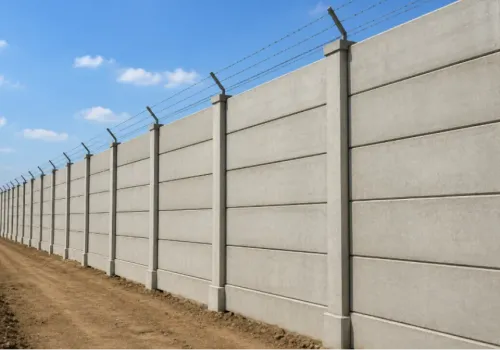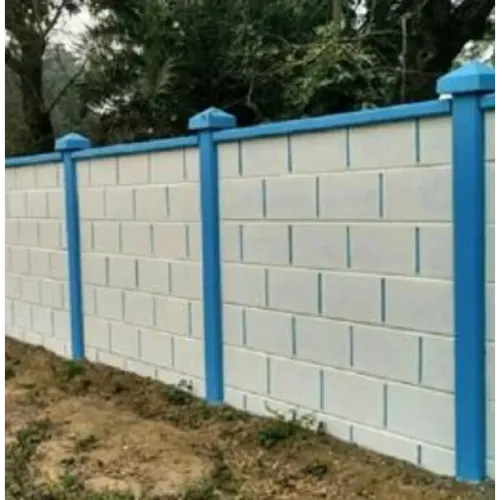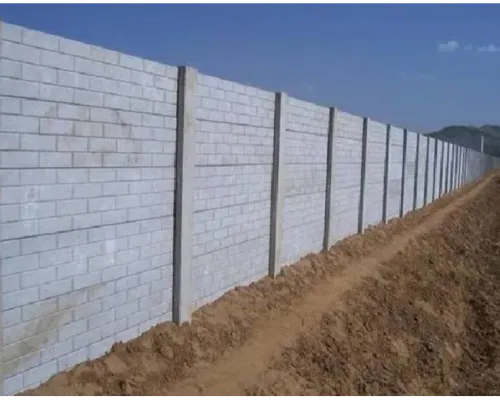


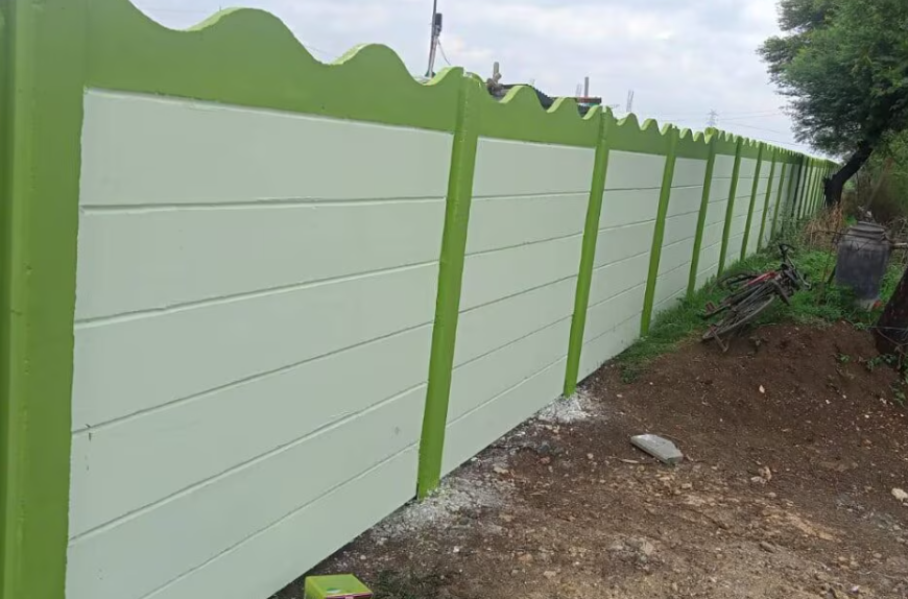
Boundary walls are essential for factories, warehouses, residential developments, institutional campuses, industrial plots, and infrastructure sites. While conventional masonry remains familiar, it can involve lengthy on-site work, multiple trades, material handling, curing, and dependence on weather conditions. This is why many project teams now evaluate a Precast Wall Manufacturer when planning boundary construction.
For builders and industrial property owners in Nagpur, Maharashtra, precast construction can be particularly useful when the project involves long boundary stretches or requires a more organized installation process.
How Precast Wall Construction Works
Precast walls are manufactured as individual components under controlled production conditions and transported to the project site for installation. A typical boundary wall system may include RCC columns, precast panels, foundation arrangements, and other components based on the selected design.
Unlike conventional brick or block construction, much of the component production happens away from the final installation area.
The basic process generally includes:
- Understanding the required wall length and height
- Reviewing site and ground conditions
- Finalizing suitable component dimensions
- Manufacturing precast components
- Transporting them to the location
- Installing columns and panels according to the layout
This approach shifts a considerable portion of construction activity from the site to the manufacturing stage.
Why Construction Speed Can Improve
A conventional compound wall usually requires several sequential activities. Excavation, masonry work, mortar preparation, plastering, curing, and finishing can extend the construction schedule.
Precast systems follow a different workflow.
Because the wall panels and related components are prepared before installation, site teams can concentrate largely on positioning and assembling the system. This can reduce the number of wet construction activities required along the boundary.
For projects around Nagpur where development schedules are closely coordinated with civil, structural, utility, or factory work, this predictability can be valuable.
Precast Walls Can Reduce Site Congestion
Large construction projects already involve movement of workers, machinery, raw materials, and vehicles. Building a long conventional boundary wall can add bricks, sand, cement, water, scaffolding, and mixing activities to the site.
Precast construction can reduce some of this material handling.
Fewer construction activities along the boundary may also help project managers maintain cleaner access routes and organize other site operations more efficiently.
Where Precast Walls Are Commonly Considered
The system is not limited to one type of property. Depending on design requirements, precast boundary walls can be considered for:
- Industrial facilities and factory premises
- Warehouses and logistics properties
- Residential layouts
- Commercial developments
- Agricultural and institutional properties
- Infrastructure sites
- Open plots requiring defined boundaries
The appropriate specification depends on wall height, expected use, site conditions, structural requirements, and project-specific needs.
Quality Starts Before Installation
Choosing precast construction does not automatically make every wall system suitable for every site. Component design, reinforcement, concrete quality, dimensional consistency, foundations, installation practices, and handling all influence final performance.
Before selecting a system, project teams should clarify the required wall dimensions, application, ground conditions, access for transportation, and expected installation sequence.
A reliable manufacturer should be able to discuss these practical considerations rather than treating every project as identical.
Local Manufacturing Can Simplify Coordination
Transportation is an important part of precast construction because finished components must reach the project without unnecessary handling or damage.
Working with a manufacturer serving Nagpur and surrounding parts of Maharashtra can make site coordination, delivery planning, measurement discussions, and installation scheduling more manageable.
Urbtec Precast manufactures precast concrete wall solutions for different property and industrial requirements in the region. For project teams evaluating precast construction, the most useful starting point is a clear understanding of the site rather than simply selecting a wall based on appearance.
Precast walls are ultimately a construction method, not merely a finished product. Their main advantage comes from combining controlled manufacturing with planned on-site assembly. When the system is properly selected and installed, it can provide builders, contractors, and property owners with a practical alternative to conventional boundary wall construction.