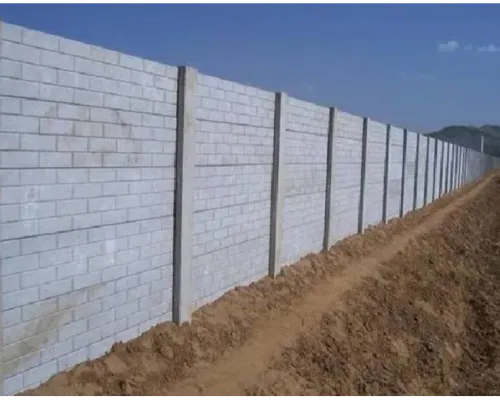


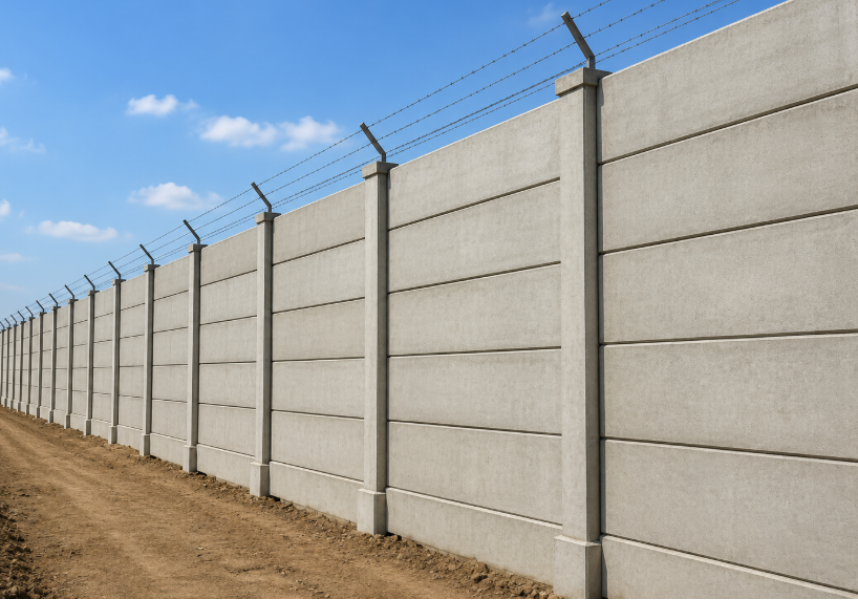
Precast construction changes where much of the construction work happens. Instead of forming and casting every concrete element at its final location, components are manufactured separately and transported to the project for installation.
Understanding the role of a Precast Industry Manufacturer can help contractors, builders, and industrial owners see why production control matters when selecting concrete wall systems.
Manufacturing Begins With Repeatable Dimensions
One of the practical characteristics of precast production is the use of moulds.
When components are repeatedly manufactured for a wall system, controlled mould dimensions can help maintain greater uniformity across a production batch. This matters because panels, posts, and other elements often need to align during installation.
Dimensional inconsistencies can create unnecessary adjustment work at the project site.
For long boundaries around industrial developments or large land parcels, repeatability becomes increasingly important because the number of components can be substantial.
Concrete Preparation Matters
Concrete performance depends on more than its visible finished surface.
Material selection, proportioning, mixing, placement, compaction, and curing influence the manufactured component. The exact requirements should correspond with the component design and intended application.
Production conditions can also make it easier to follow a defined sequence compared with constantly shifting work areas on a large construction site.
That does not mean factory production removes the need for quality checks. Instead, it creates an environment where manufacturing procedures can be organized more systematically.
Reinforcement Must Match the Component Design
RCC precast products combine concrete with reinforcement according to their structural design.
Correct reinforcement positioning is important because the steel needs to remain where intended during casting. Appropriate cover and component dimensions also need attention.
Project buyers do not necessarily need to become concrete engineers, but they should understand that two products with similar external appearances may not necessarily have identical specifications.
This is one reason procurement decisions should consider technical requirements alongside price.
Curing Is Part of Manufacturing
Concrete requires appropriate curing to develop its intended properties.
In precast production, curing can be incorporated into the manufacturing workflow before components are transported for installation. Finished units also need appropriate handling and storage so they are not unnecessarily damaged before dispatch.
For contractors ordering components for projects in Nagpur, understanding expected manufacturing and dispatch schedules can help coordinate installation teams and site readiness.
Inspection Helps Identify Production Issues
Quality checks may cover dimensions, visible defects, component condition, reinforcement-related requirements, and other parameters relevant to the product specification.
The extent of testing and documentation will depend on the project and applicable requirements.
Infrastructure companies and industrial buyers may have more detailed specifications than smaller property projects. Manufacturers should therefore understand the intended application before production begins.
Logistics Are Part of the Precast Process
Manufacturing does not end when a component leaves the mould.
Components must be stored, loaded, transported, unloaded, and installed without inappropriate handling. Delivery planning is particularly important for long concrete elements or large quantities.
Nagpur's connectivity to industrial and development areas across Maharashtra makes precast construction relevant to different types of projects, but site accessibility still needs individual assessment.
A project with clear truck access may have very different logistics from a congested or partially developed property.
Why Manufacturing Discipline Matters to Buyers
The completed wall is assembled from many individual components. Small inconsistencies repeated across a large order can therefore create larger installation challenges.
Urbtec Precast works within the precast concrete products segment, supplying solutions for boundary and industrial applications around Nagpur. For buyers, evaluating the manufacturing approach alongside the final product can provide a more complete understanding of what they are purchasing.
Precast construction works best when design, production, transportation, and installation are treated as connected stages. A dependable manufacturing process cannot compensate for unsuitable site planning, just as careful installation cannot fully correct inconsistent components.
For project teams evaluating precast products, asking how the system is produced is therefore just as important as asking how the finished wall will look.