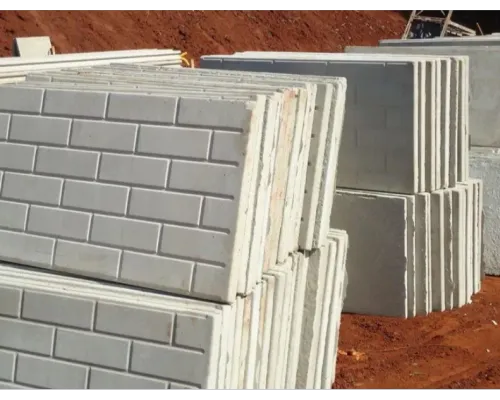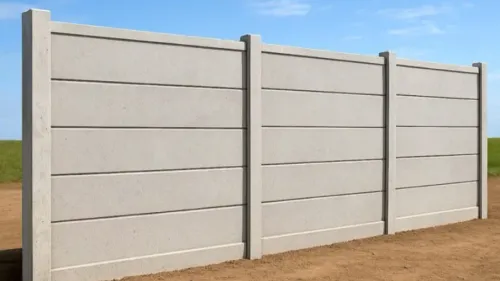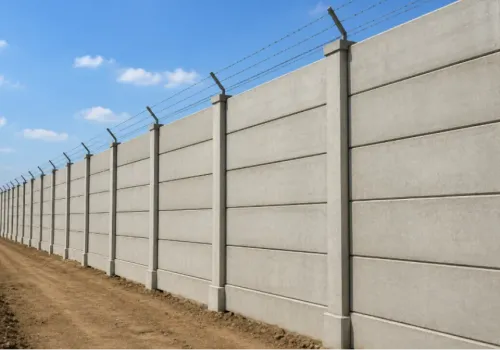


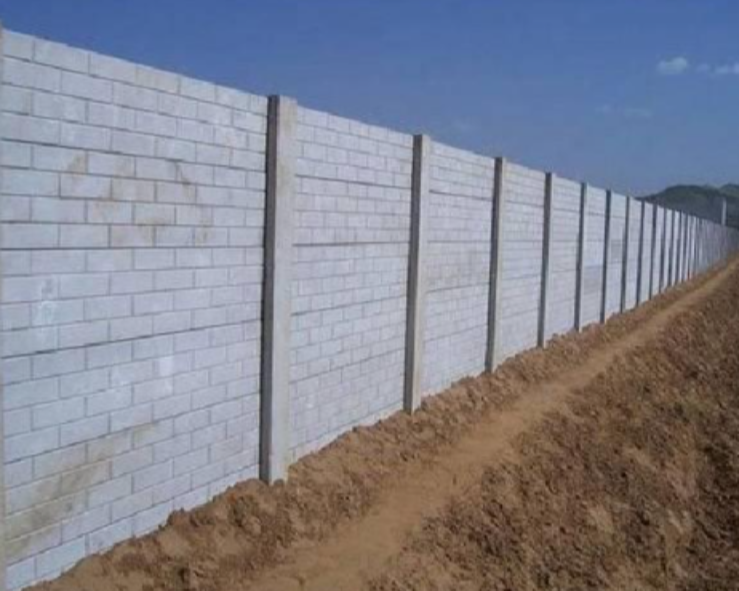
Industrial boundary walls often extend across large areas, making even a small planning mistake expensive to correct repeatedly. A factory owner may need hundreds of metres of perimeter wall, while a logistics or manufacturing project may require installation to fit around roads, gates, utilities, drainage, and future expansion.
Choosing a Precast Industrial Wall Manufacturer therefore requires more than comparing quotations.
Mistake 1: Asking for a Price Before Defining the Requirement
A request such as 'What is your precast wall rate?' provides very little project information.
Wall height, boundary length, component specification, location, ground conditions, transportation, installation, and other scope items can influence project requirements.
Before requesting a detailed quotation, prepare at least approximate measurements and basic site information.
This makes supplier comparisons far more meaningful.
Mistake 2: Ignoring Ground Conditions
The visible panels are only one part of a boundary wall.
Supporting arrangements and foundations interact with site conditions. Uneven terrain, filled soil, slopes, drainage routes, or other ground characteristics may need to be considered during planning.
Industrial owners should avoid selecting a standard wall configuration without considering what exists below and around the proposed boundary.
Where necessary, project-specific structural guidance should form part of the planning process.
Mistake 3: Treating Every Precast Product as Equivalent
Two wall systems can look similar in photographs while differing in dimensions, reinforcement, concrete specification, manufacturing approach, and supporting components.
Procurement teams should compare specifications alongside commercial rates.
For large projects, consistency across production batches is also important because small dimensional variations can affect installation across long boundary runs.
Mistake 4: Forgetting Transportation Access
Concrete components need to reach the site safely.
A manufacturing facility may be able to produce the required quantity, but the project can still face delays if trucks cannot conveniently reach the installation area.
Check gate widths, road conditions, turning space, unloading areas, overhead restrictions, and movement within the property.
Nagpur has significant industrial development and good regional connectivity, but individual project sites across Maharashtra can still have very different access conditions.
Mistake 5: Not Clarifying Installation Responsibility
Never assume installation is automatically included with supply.
Ask specifically what the quotation covers and which party is responsible for site preparation, unloading, foundations, installation, equipment, alignment, and related work.
A clearly defined scope reduces disputes between the supplier, contractor, and project owner.
Mistake 6: Finalizing Without Accurate Boundary Measurements
Precast construction works efficiently when quantities are planned properly.
Incorrect length estimates can result in excess components or shortages during installation. Gate openings, corners, level changes, utility crossings, and other interruptions should also be identified.
A site survey or verified layout can help convert approximate requirements into more dependable quantities.
Mistake 7: Choosing Only on the Lowest Quotation
Industrial procurement naturally considers cost, but the lowest number on a quotation is not always the lowest completed project cost.
Compare whether each proposal includes equivalent specifications and scope.
Transportation differences, installation exclusions, component specifications, or site-related costs can significantly change the final figure.
A Better Evaluation Process
Factory owners and contractors can simplify selection by preparing a short project brief containing the wall length, height, property type, site location, access information, required schedule, and available drawings.
Urbtec Precast works with industrial and development requirements in the Nagpur region, where this project-specific information can help determine suitable precast wall arrangements and supply planning.
Industrial boundary construction is repetitive by nature, which means good decisions are repeated across the entire perimeter and poor decisions are too. Careful specification, realistic logistics, clear responsibilities, and accurate measurements can prevent many of the most common problems before manufacturing begins.