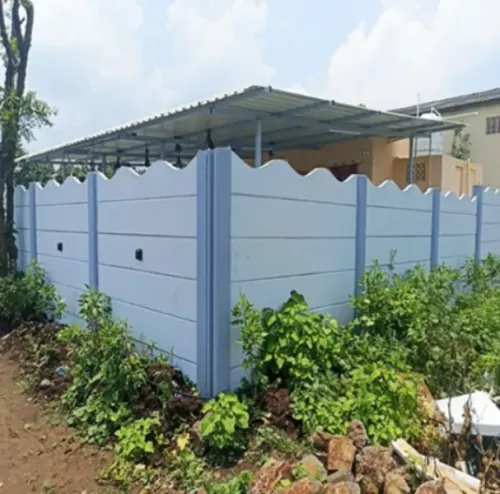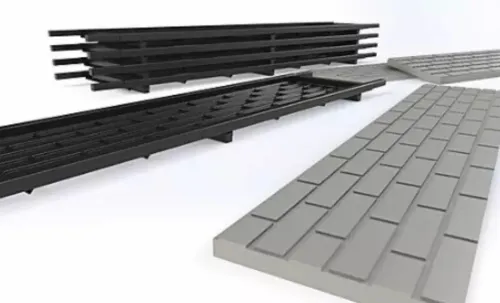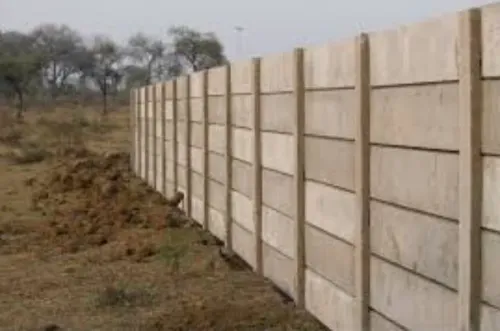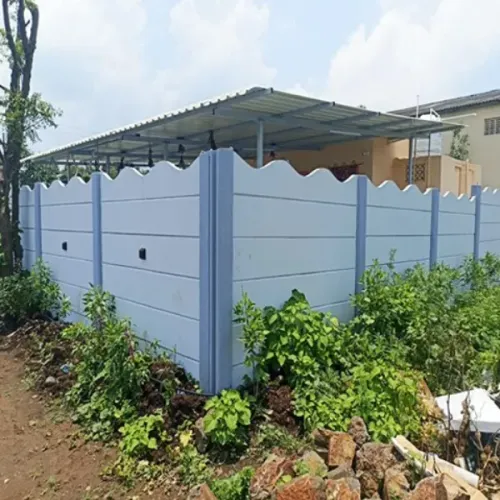
A garden boundary needs to satisfy more than one requirement. It should define the property or landscape zone, suit the surroundings, remain practical to install, and work with site features such as slopes, drainage, paving, irrigation, and planting.
Choosing a Precast Garden Wall Supplier therefore requires more consideration than selecting a panel design from a catalogue.
Define What the Wall Needs to Do
Start with function.
Is the wall intended to form the outer property boundary, divide landscape zones, enclose a residential development, separate an institutional garden, or define a recreational area?
The intended purpose influences decisions around height, layout, appearance, and construction requirements.
A wall for a farmhouse perimeter may be planned differently from one surrounding a landscaped housing development.
Measure the Boundary Properly
Approximate measurements are useful for initial discussions, but final quantities should be based on more dependable site information.
Measure or verify:
- Overall boundary length
- Corners and direction changes
- Gate openings
- Level changes
- Existing structures
- Utility crossings
- Areas that may remain open
Accurate quantities help reduce shortages and unnecessary excess material.
Review the Ground Along the Complete Boundary
Do not evaluate only the easiest section of the property.
Walk the entire proposed wall alignment. Look for slopes, soft areas, drainage channels, trees, existing foundations, underground services, and restricted access points.
These conditions can influence installation planning.
For landscaped properties, checking them before major planting or paving is particularly useful.
Ask What the Quotation Includes
Supplier quotations can cover different scopes.
One may include only precast components, while another may include transportation or installation. Before comparing prices, understand whether the proposal covers:
- Panels and columns
- Transportation
- Loading and unloading
- Foundation-related work
- Installation
- Equipment requirements
- Finishing, where applicable
- Taxes and other charges
Comparing equivalent scope prevents misleading price decisions.
Examine the Product Specification
Visual appearance is important for a garden wall, but it should not be the only selection criterion.
Ask about component dimensions, material specification, reinforcement where applicable, supporting elements, and recommended installation arrangement.
For developers and contractors, consistency across components can be particularly important on long visible boundaries.
Plan Delivery Access
Precast components require vehicle access.
A farmhouse outside Nagpur may have a long approach road, while an urban residential development could have tighter entry conditions. Both situations need appropriate planning.
Confirm whether the delivery vehicle can enter or reach a practical unloading location without interfering with finished landscape features.
Consider the Installation Sequence
Where landscaping is part of a larger project, boundary installation should be coordinated with other activities.
Installing the wall before delicate planting, final paving, or irrigation completion can reduce the risk of disturbing finished work.
Similarly, major drainage or utility work should be resolved before permanent wall components restrict access.
Choose a Supplier Who Asks About the Site
A useful supplier should want to understand the application rather than immediately recommending a standard configuration.
Urbtec Precast serves precast boundary requirements in Nagpur and can be evaluated based on the actual property dimensions, application, access, and installation needs.
For customers across Maharashtra, local and regional supply coordination can also be relevant because transportation forms part of the precast construction process.
A good buying decision brings together appearance, specification, site suitability, logistics, and installation. When these factors are considered before ordering, a precast garden wall can be integrated into the property more effectively instead of being treated as an isolated construction item.
Keywords